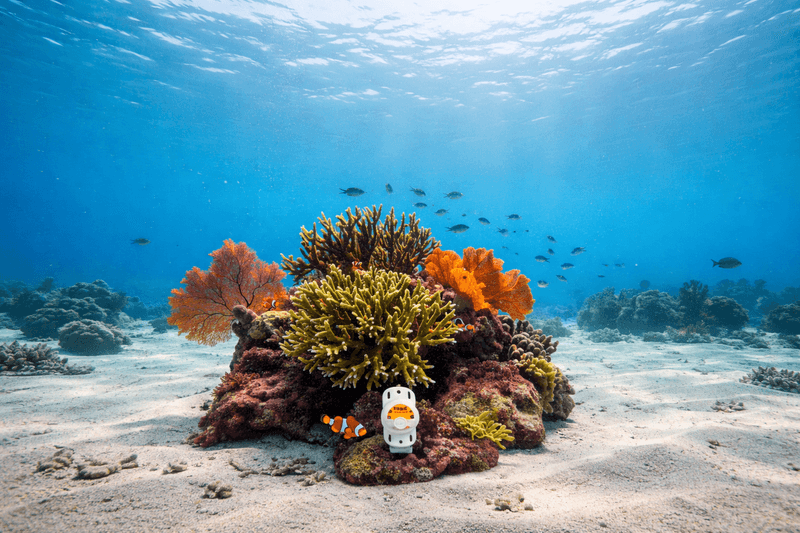
Seawater Data Logger: High-Precision Autonomous Monitoring for Marine Research and Aquaculture
Rugged, Corrosion-Resistant Sensors with Bluetooth Connectivity and Up to 96,000 Data Points for Long-Term Underwater Deployment
Executive Summary
Understanding device specifications is crucial before selecting a seawater data logger. Each device is designed with different features and capabilities depending on field monitoring needs. Generally, seawater data loggers are equipped with high-precision sensors capable of measuring environmental parameters such as temperature, pressure, depth, and sometimes salinity or conductivity. These sensors are designed to remain stable even in highly corrosive marine environments. Protective materials such as titanium, stainless steel, or engineering plastics are used to ensure durability when submerged. A popular example is the HOBO TidbiT MX Temperature 5000-ft Data Logger, which can operate at depths up to 5,000 feet (approx. 1,524 meters) and features wireless Bluetooth setup, 96,000 data point memory, automatic water detection, LED temperature indicators, and battery-saving design.

The Challenge
- !
HOBO TidbiT MX Temperature Data Logger Deployment for Marine and Brackish Water Monitoring
The primary function of a seawater data logger is to automatically record, store, and monitor marine environmental conditions over a specified period. These devices measure parameters such as temperature, pressure, depth, and sometimes salinity or conductivity. Data obtained from sensors is stored in internal memory and can be retrieved and analyzed at any time. The HOBO TidbiT MX model offers wireless configuration and data download via Bluetooth using a smartphone or tablet, internal memory for approximately 96,000 temperature readings, waterproof protection up to 1,500 meters, automatic water detection for accurate timing, LED indicators for temperature threshold alerts, and efficient power management for extended battery life. Proper selection requires identifying needed features and ensuring calibration support to maintain measurement accuracy over time.
Strategic Approach
- 1
Determine which parameters are needed for your monitoring activity—temperature only, or also pressure, depth, or salinity. Different research or environmental projects require different sensor configurations.
- 2
Verify that the data logger has proper calibration services available. Calibration adjusts sensors to maintain accurate measurements according to standards, preventing data drift over time.
- 3
Place the logger at the desired depth (up to 1,500 meters for HOBO TidbiT MX). The rugged titanium, stainless steel, or engineering plastic housing protects against corrosion and water pressure.
- 4
Use a smartphone or tablet to wirelessly set up the logger, adjust sampling intervals, and download recorded data without needing to physically retrieve the device from the water.
- 5
Transfer the downloaded data (up to 96,000 temperature points) to analysis software to understand long-term trends, detect environmental disturbances, and support data-driven decision making for marine research, conservation, or aquaculture.
Business Impact