Tree Monitoring System: Real-Time IoT-Based Technology for Continuous Tree Health Assessment
Integrating Sensors, Wireless Data Transmission, and AI Analytics to Detect Structural Damage and Prevent Tree Failure
Executive Summary
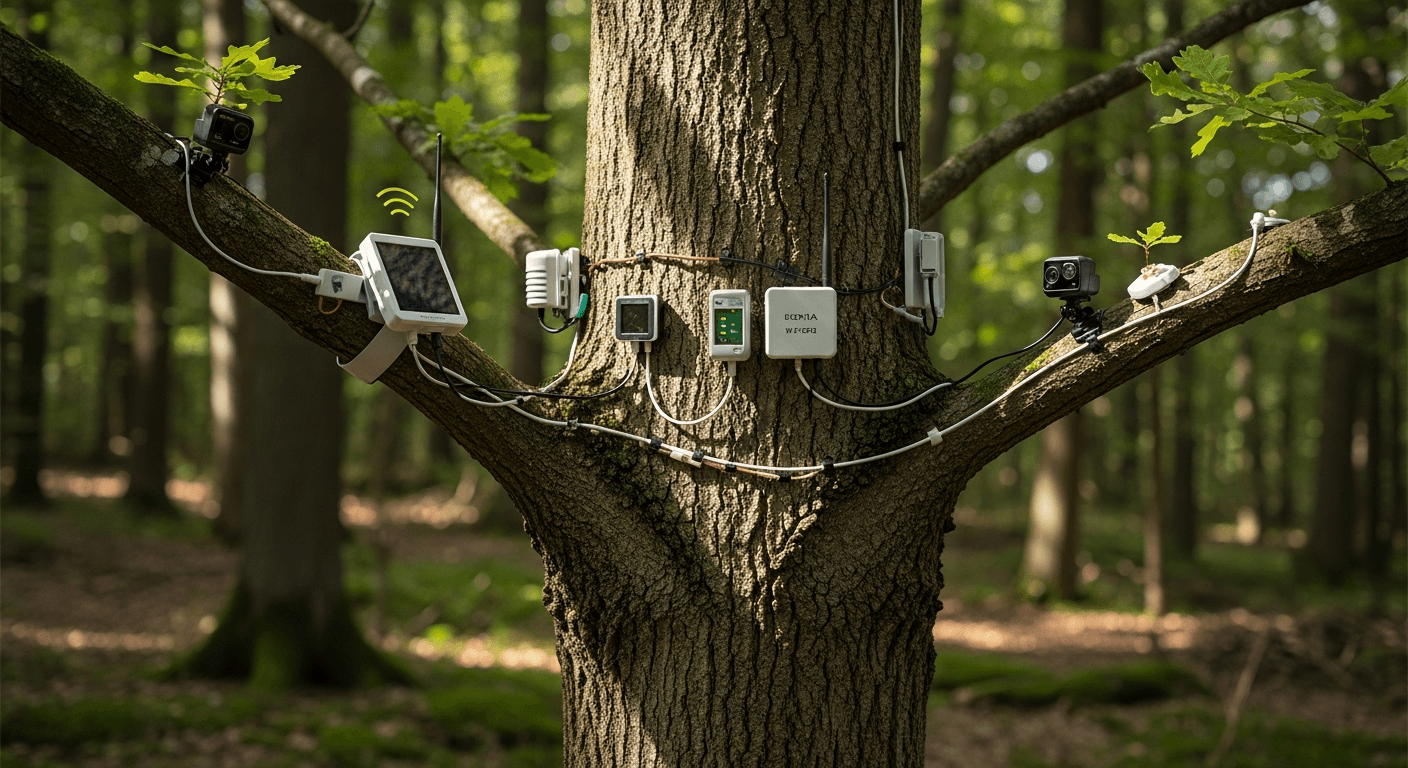
The need for Tree Monitoring System is increasing over time. Trees no longer serve only as shade or aesthetic elements but also play an important role in maintaining urban ecosystem balance. However, pressures on trees are much greater than decades ago due to climate change—extreme weather such as strong winds, heavy rain, or prolonged drought puts tremendous stress on tree structures. With a monitoring system, these changes can be detected early so maintenance actions can be taken before damage becomes severe. The system combines various sensors, IoT devices, and digital analysis platforms designed to monitor tree conditions continuously 24 hours a day without requiring field personnel.
The Challenge
- !
End-to-End Tree Monitoring System Deployment for Urban and Conservation Areas
The Tree Monitoring System enables early detection of damage that is difficult to see manually, such as internal decay, root dryness, or trunk cracks. Faster detection helps prevent tree conditions from worsening. Data on trunk movement, soil moisture levels, and internal tree structure helps assess tree stability, reducing the potential for tree falls due to strong winds or weakened roots. The system also stores tree health records over time, helping determine long-term management strategies and evaluate the effectiveness of performed treatments. The workflow includes sensor data collection, wireless transmission, AI-based analysis, and early warning notifications sent to officers or area managers so immediate action can be taken before problems become more serious.
Strategic Approach
- 1
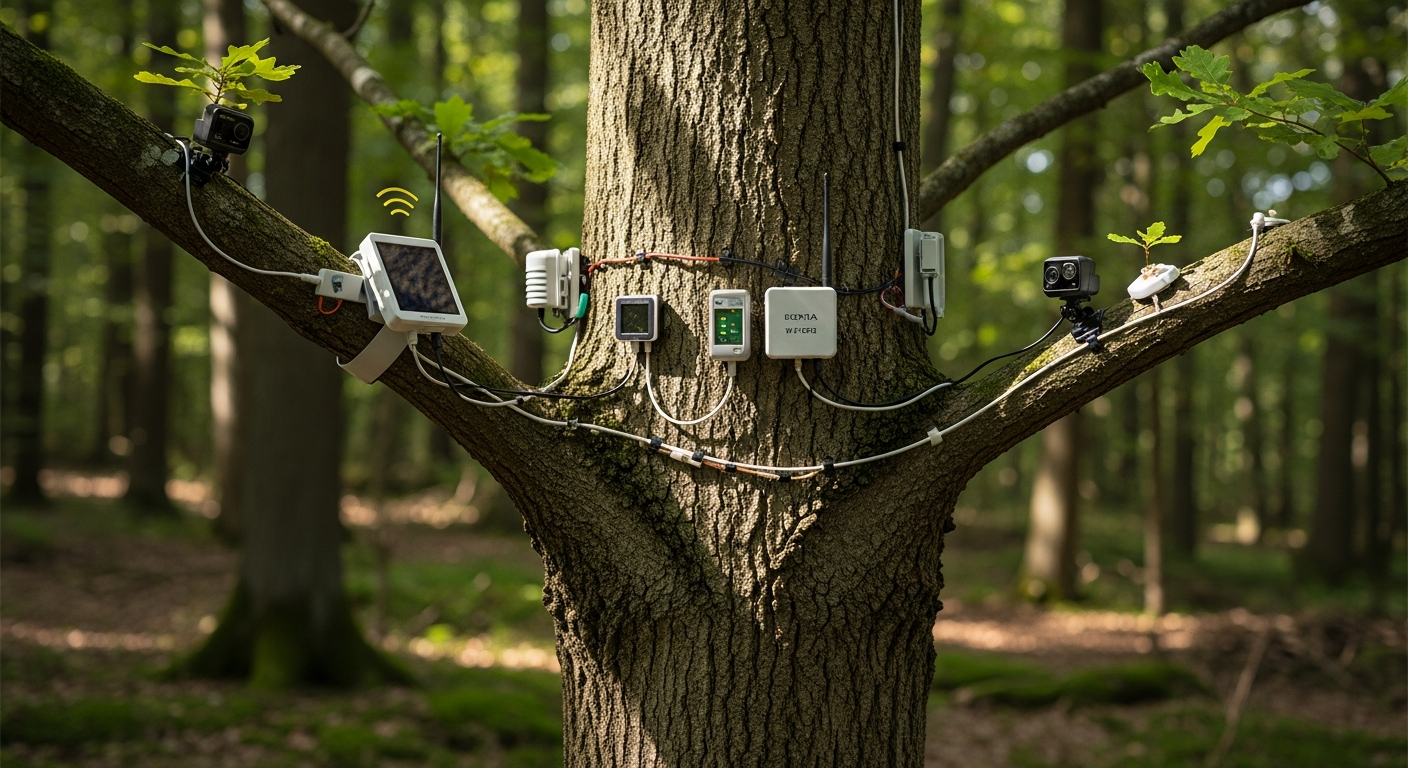
Install sensors on the trunk, roots, soil, and surrounding area to continuously record parameters such as moisture, temperature, vibration, trunk curvature, and internal structural conditions. Data is collected 24 hours a day without requiring field personnel.
- 2
Connect sensors to IoT modules such as LoRaWAN, WiFi, NB-IoT, or GSM for wireless data transmission to a processing center. This enables the system to be used in various locations—cities, forests, or conservation areas far from urban centers. Data transmission occurs periodically (every few minutes, hours, or daily) according to monitoring needs.
- 3
Process all incoming data using specialized software capable of reading patterns, analyzing tree health trends, and detecting anomalies. Advanced systems use artificial intelligence (AI) to predict risks such as potential falls, drought, root diseases, and other problems. Analysis results are displayed in graphs, interactive dashboards, or automated reports that are easy to understand.
- 4
Send automatic notifications when significant changes are detected—such as a drastic drop in soil moisture, abnormal trunk shifts, or strong vibrations indicating risk of breakage. Notifications are sent to officers or area managers so they can take immediate action before the problem develops further.
Business Impact