Tree Monitoring Technology: Real-Time Digital Solutions for Urban and Forest Tree Health Management
Sensor-Based, Continuous Monitoring to Enable Early Detection, Prevent Tree Falls, and Optimize Environmental Maintenance
Executive Summary
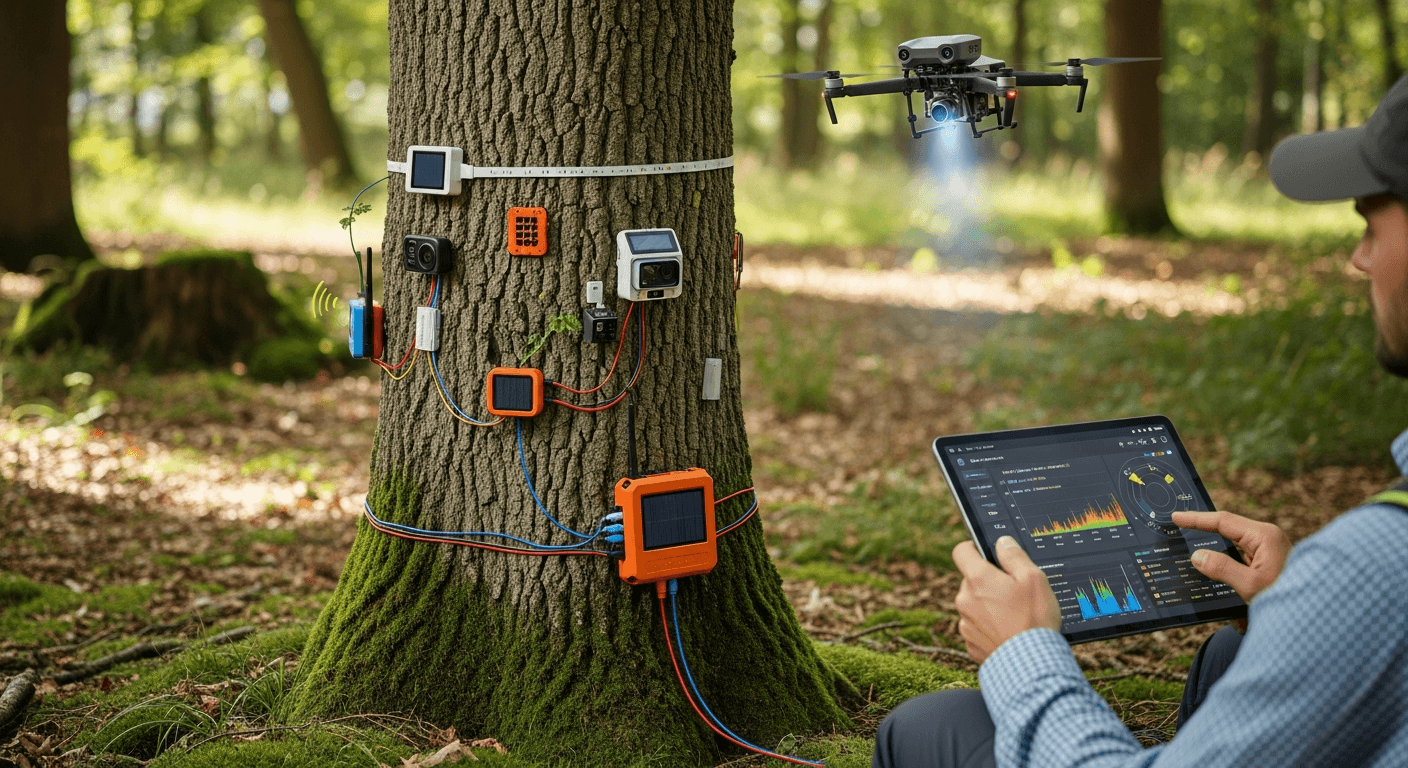
Tree Monitoring Technology is not a single device but a combination of various tools and systems, each with different functions and focus areas. Key types include soil moisture sensors (measuring water content to prevent drought or root rot), strain gauge and tilt sensors (detecting internal cracks and leaning), environmental sensors (temperature, humidity, light, wind speed), and drones with multispectral cameras (covering large areas like forests or plantations). These technologies help urban managers, environmental agencies, and communities maintain tree health more efficiently and accurately.
The Challenge
- !
Deployment of Integrated Tree Monitoring System for Urban and Forest Environments
Tree Monitoring Technology provides significant benefits for both urban and forest environments. Its ability to detect problems before they reach dangerous levels allows early identification of changes in trunk condition, temperature, soil moisture, or growth patterns. Root diseases, drought stress, and structural damage can be detected early, enabling timely treatment with lower costs and higher recovery chances. In urban areas, tilt sensors and stress sensors monitor trunk and root strength to predict fall risks during rainy seasons or storms. With complete real-time data, tree maintenance becomes more targeted—eliminating overwatering, unnecessary fertilization, and time-consuming manual inspections. This technology makes maintenance more cost-effective and labor-efficient.
Strategic Approach
- 1
Install soil moisture sensors around the root zone to measure water content and detect drought or waterlogging conditions.
- 2
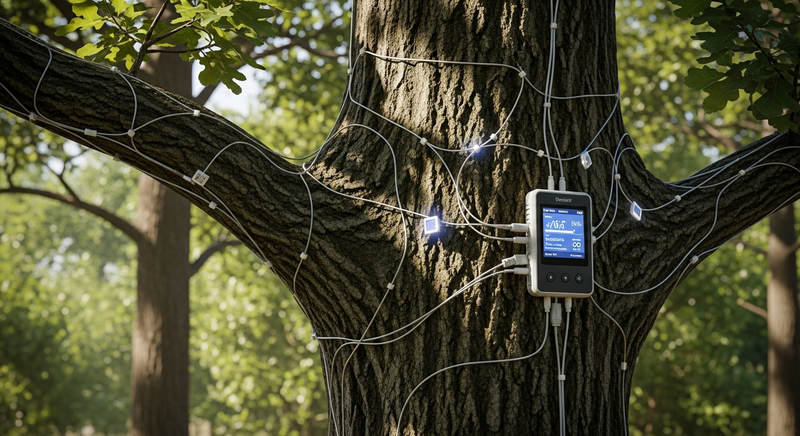
Attach strain gauge and tilt sensors to the trunk to monitor micro-movements, internal cracks, and leaning angles continuously.
- 3
Deploy environmental sensors (temperature, humidity, light intensity, wind speed) near the tree canopy to correlate weather impact with tree stress levels.
- 4
For large-area coverage (forests or plantations), schedule drone flights with multispectral cameras to capture 360-degree visualizations and detect leaf damage, pest attacks, or abnormal growth patterns.
- 5
Integrate all sensor data into a centralized IoT platform with real-time analytics and automated alert systems for early warning of potential tree failure.
Business Impact